

Our Services
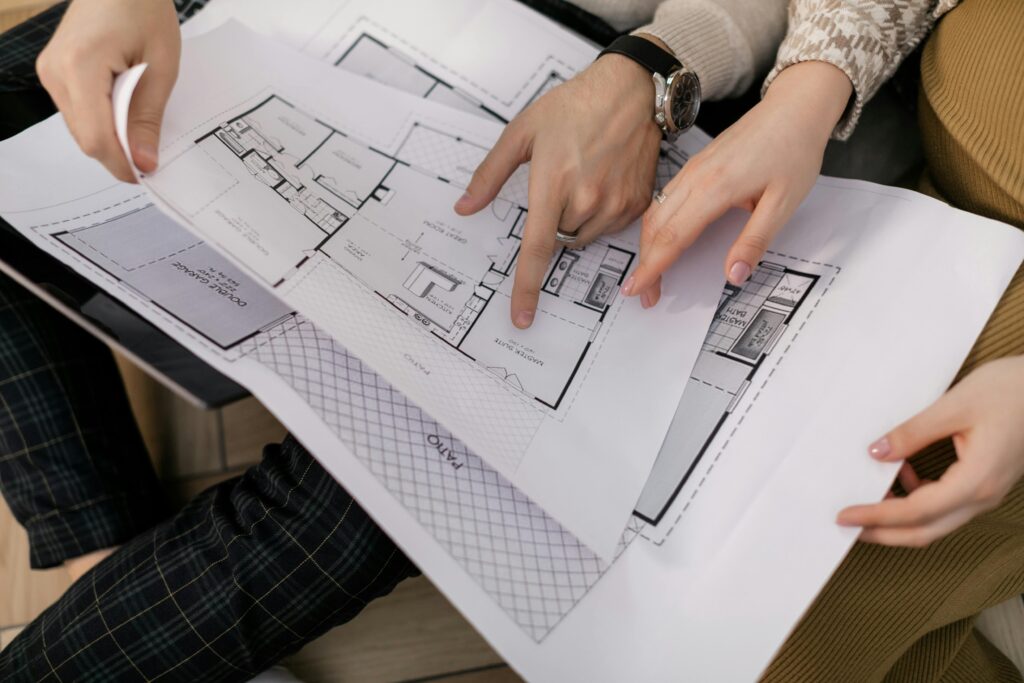
- Building Vaastu Plan & Elevation
- Residential & Commercial Building Construction
- Total & Labour Contracts
- Consulting Services
- Repairing & Renovation
- Estimation, BOQ & BOM Services
- Project Planning
- Interior Works
Building Vaastu Plan & Elevation
A building Vaastu plan involves designing a house according to Vaastu Shastra principles to promote positivity and well-being.
Key aspects include the orientation of the house, the placement of rooms, and the use of natural elements like light and ventilation.
A Vastu plan aims to harmonize the structure with natural forces, potentially leading to financial prosperity, harmonious relationships, and enhanced well-being.
Building elevation design refers to the architectural representation of a building’s exterior, showing its vertical faces (front, rear, sides) in a two-dimensional, scaled drawing
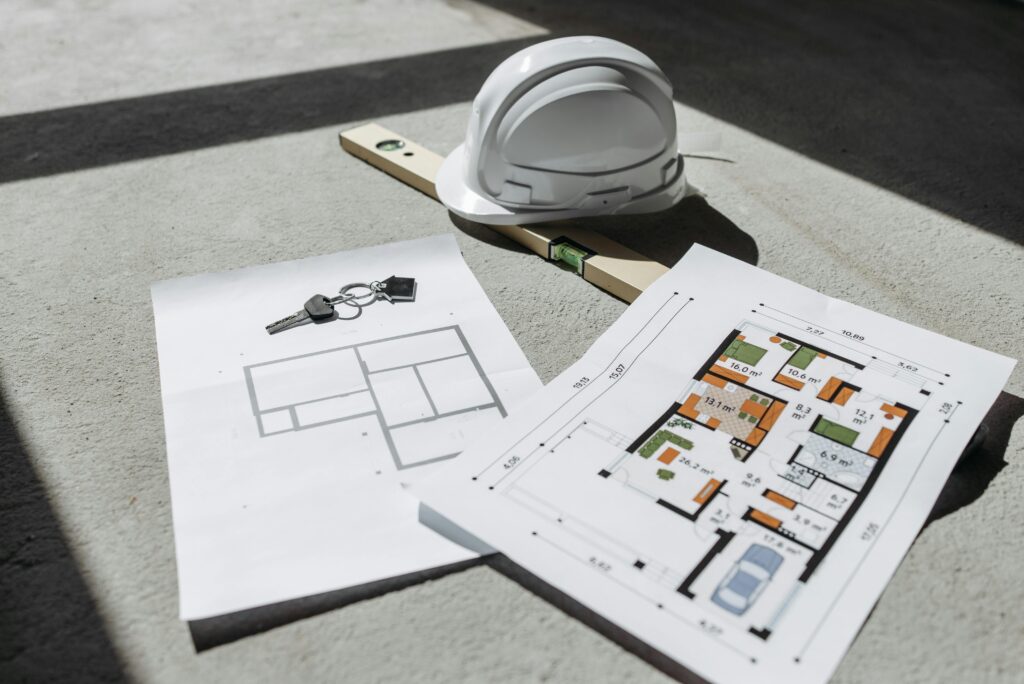
Building Construction
Building construction, in its simplest form, is the process of creating structures, typically buildings, by assembling various materials and components according to a design.
This involves a series of planned activities, including site preparation, foundation laying, structural framing, and finishing work.
Building construction is a collaborative effort requiring the expertise of architects, engineers, contractors, and skilled laborers.
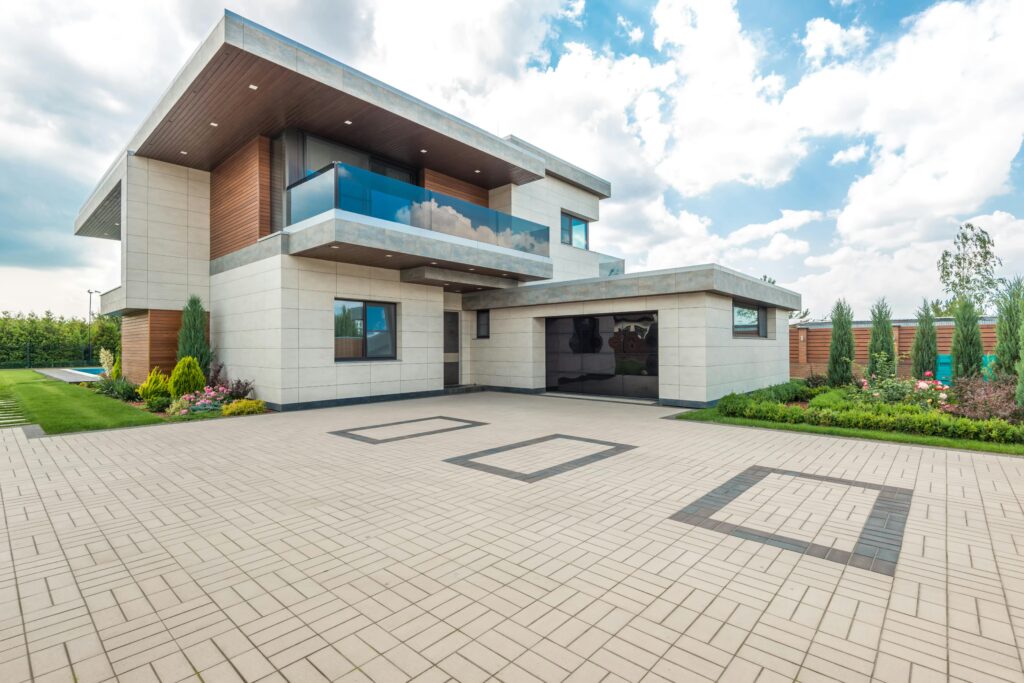
Total & Labour Contracts
In construction, a total contract refers to the complete, agreed-upon price for a construction project, including all labour, materials, and other associated costs.
Labour contracts refer to agreements in which a contractor supplies only the labor for a project, while the owner provides all necessary materials.

Consulting Services
In building construction, consulting services refer to expert advice and guidance provided by specialized professionals throughout the lifecycle of a project, from initial planning to completion.
These services aim to optimize project outcomes by addressing areas like project management, cost estimation, risk management, and regulatory compliance.
Essentially, consultants offer specialized knowledge and skills that clients may lack internally, helping them navigate complex projects and make informed decisions.
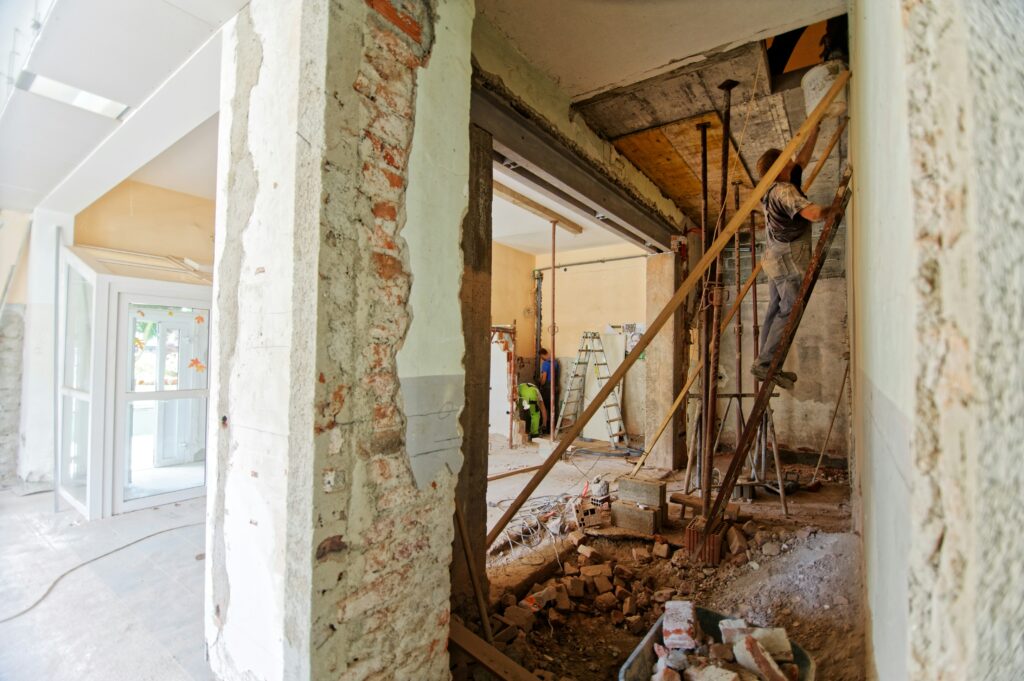
Repairing and Renovation
Involves fixing or restoring something that is damaged, broken, or malfunctioning.
Involves making significant changes or upgrades to a property’s structure, design, or appearance.
Estimation, BOQ & BOM Services
In construction, Estimation, BOQ (Bill of Quantities), and BOM (Bill of Materials) are crucial services that help manage project costs, materials, and procurement.
Estimation provides a cost prediction, BOQ quantifies all project elements with associated costs, and BOM lists the materials needed for production, often in a manufacturing context.

Project Planning
It involves the choice of technology, the definition of work tasks, the estimation of the required resources ( Material + Labour + Finance) and durations for individual tasks, and the identification of any interactions among the different work tasks.
A good construction plan is the basis for developing the budget and the schedule for work.

Interior Works
In building construction, “interior work” refers to all construction and finishing activities that take place within the interior spaces of a building, encompassing everything from structural elements to decorative finishes.
It involves creating functional and aesthetically pleasing environments within the building’s shell.

FAQ
Most Important Questions and Answers
First Step for Starting your building..,
The very first step in building construction isn’t physical; it’s planning, design, and securing approvals/permits, involving land acquisition, feasibility studies, working with architects, and getting legal clearance.
Once legally cleared, the first physical step is site preparation (clearing, levelling, marking) and then excavation, followed by laying the foundation to ensure stability.
Why Engineers are need your construction
Engineers are crucial in building construction for ensuring safety, stability, and compliance; they translate architectural designs into reality by managing structural integrity, overseeing site operations, handling complex codes, preventing costly errors, and optimizing functionality for aspects like drainage and traffic flow, making them essential for a successful, safe, and legally sound project.
Why Government Approval is necessary to construct your building
Government approval is vital for building construction to ensure your project meets safety codes (fire, structural), legal zoning laws, and environmental standards, preventing hefty fines, demolition, and legal issues while also enabling essential utility connections (water, power) and easier property resale/loans.
It confirms your plans align with local regulations like FSI, setbacks, and land use, protecting occupants and the community
Why building setbacks are needed
Building setbacks are essential for ensuring adequate natural light, ventilation, and privacy for all properties, while also providing crucial space for safety (emergency access, fire breaks), functional infrastructure (utilities, drainage), environmental protection (managing runoff, noise buffers), and maintaining organized, aesthetically pleasing urban environments by preventing overcrowding and allowing for open spaces and greenery.
They are mandatory legal requirements to ensure planned, safe, and livable communities, preventing structures from infringing on neighbors’ rights to air, sun, and access.
Why Proper Construction Agreement is need
A proper construction agreement is crucial because it legally defines project scope, costs, timelines, and responsibilities, acting as a roadmap that protects all parties (owners, contractors) from disputes, financial loss, and delays by setting clear expectations, managing risks (like changes or issues), and providing a framework for communication and legal recourse if problems arise.
Without one, misunderstandings lead to costly litigation, project halts, and potential ruin for businesses.
The min Construction Period for small Houses
Approximately..,
- Small House (1,000-1,500 sq ft): 4-9 months.
- Medium House (2,000-3,000 sq ft): 9-14 months.
- Large/Luxury Homes: 12-24+ months.
How to select your building contractors
To select building contractors, first define your project & budget, then research & shortlist firms by checking licenses, insurance, reviews, portfolios, and references; get detailed, comparable quotes, and finally, verify their experience, communication, and contract terms before signing a clear agreement, focusing on quality and fit over just the lowest price
How to select Construction Materials
Selecting construction materials involves balancing cost, durability, climate suitability, availability, and project needs (strength, function) with an eye towards sustainability and maintenance, ensuring materials meet quality standards, are compatible with other components, and fit your aesthetic goals for a safe, lasting, and efficient structure.